When planning a distillery, one of the most important equipment decisions is choosing between a pot still and a column still. Both systems are widely used in the spirits industry, but they serve different purposes and produce distinctly different styles of alcohol.
Understanding the differences between these two distillation methods can help distillers select the right equipment for their production goals.

What Is a Pot Still?
A pot still is the traditional distillation system used for many premium spirits, including single malt whisky, cognac, rum, and some craft gins.
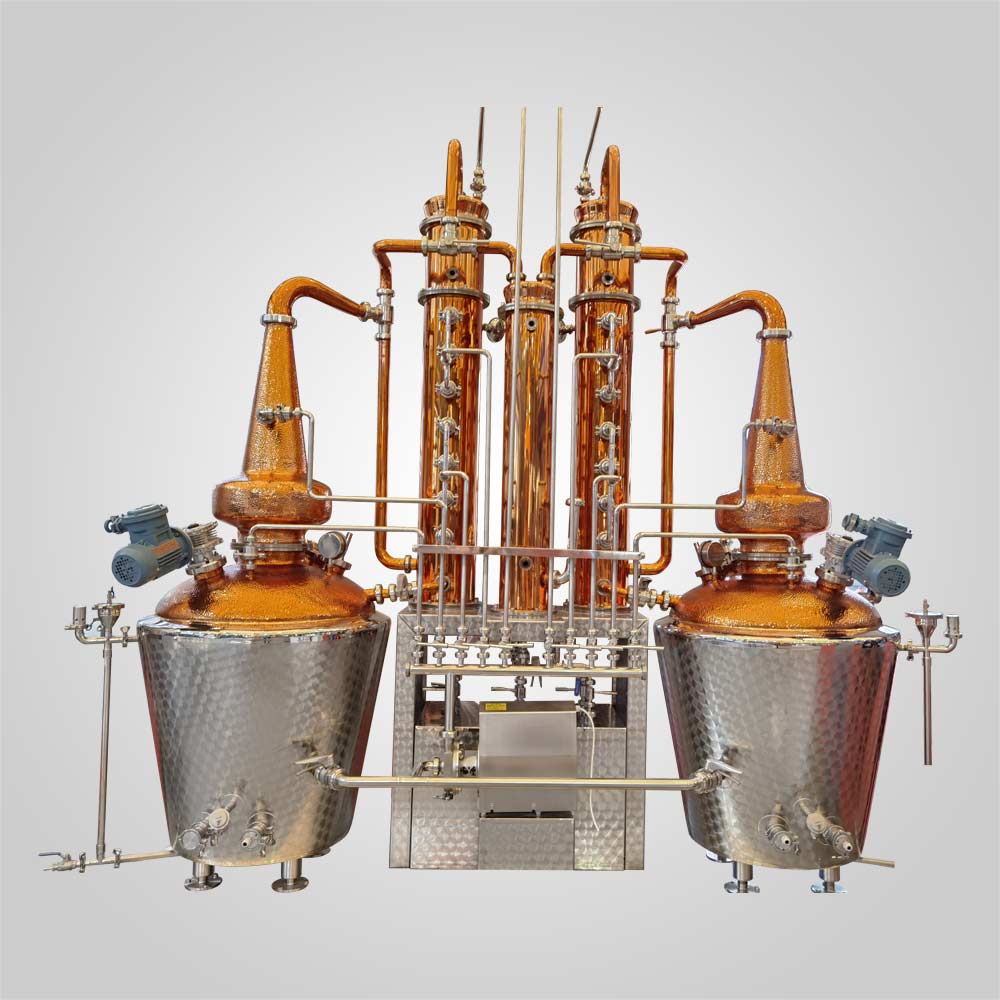
The system typically consists of a copper pot, a neck, a lyne arm, and a condenser. During distillation, the fermented wash is heated inside the pot, causing alcohol vapors to rise and travel through the still before being condensed back into liquid.
Pot stills usually operate in batches, meaning each distillation run is processed separately.
Because pot stills provide limited separation between alcohol and flavor compounds, more of the original characteristics from the fermented wash remain in the final spirit. This often results in a richer, fuller-bodied product with greater complexity and depth.
What Is a Column Still?
A column still, also known as a continuous still, uses a vertical column containing multiple plates or trays to achieve repeated vapor-liquid interactions during distillation.
Unlike pot stills, column stills can operate continuously, allowing fermented liquid to enter the system while alcohol is simultaneously collected.
This design provides significantly higher separation efficiency, producing alcohol with a higher purity and alcohol concentration.
Column stills are commonly used for vodka, neutral spirits, industrial alcohol production, and large-scale whisky and rum operations where high production volumes are required.
Key Differences
플레이버 프로필

One of the most important differences is the flavor of the final spirit.
Pot stills retain more congeners and aromatic compounds, creating spirits with greater texture, character, and complexity. This is why many premium whiskies and craft spirits are distilled using traditional copper pot stills.
Column stills produce a cleaner and lighter spirit with fewer flavor compounds. This makes them ideal for products where neutrality and consistency are desired.
Production Efficiency
Column stills are considerably more efficient than pot stills.
Because they operate continuously, they can process larger volumes of alcohol while consuming less energy per liter of finished spirit. This makes them highly attractive for commercial-scale production.
Pot stills, on the other hand, require individual batch cycles and generally have lower throughput.
Equipment Cost and Flexibility
For small craft distilleries, pot stills are often the preferred choice due to their versatility and lower initial investment.
A single pot still can be used to produce a variety of spirits, including whisky, gin, rum, and brandy.
Column stills typically involve a more complex design and higher capital investment but offer greater efficiency for producers targeting larger production volumes.
Which Still Is Right for Your Distillery?
The answer depends on your production goals.
If your focus is on creating premium, flavor-driven spirits with a strong artisanal identity, a copper pot still is often the best option.
If your objective is high-volume production, maximum alcohol recovery, or the manufacture of neutral spirits, a column still may provide greater operational advantages.
Some distilleries choose a hybrid approach, combining a pot still with a rectification column. This allows producers to achieve both flavor retention and higher purification levels while maintaining flexibility across different spirit categories.
결론
Both pot stills and column stills play essential roles in modern distillation. Neither system is inherently better—the right choice depends on the style of spirit you want to produce, your production capacity, and your long-term business goals.
By understanding the strengths and limitations of each system, distillers can make informed equipment decisions that support both product quality and operational success.
Tiantai Brewtech, a well-recognized manufacturer of beer and beverage equipment industry based in Jinan city of China, provides compete lines and the turnkey service for breweries and beverage projects worldwide. Since 2001, Tiantai team has witnessed the rapid development of the industry with 19 years of experience,Tiantai Company is committed to the research and the development of diversed brewing process, customized equipment, automatic control, and datalized management. Up to now, Tiantai Company has served more than 3500 breweries distilleries in 106countries with our equipment and solutions along with gaining good reputations.
견적을 원하시면 언제든지 문의해 주세요.
읽어주셔서 감사합니다.
헬렌 리