Cold brew coffee has become a cornerstone product for cafés, RTD (ready-to-drink) brands, and even large-scale beverage manufacturers. As production scales up, many professionals—especially those with a background in brewing or distillation—ask an important question: Does cold brew coffee require a “sparging” (grain washing) step like in beer brewing?
The short answer: No, cold brew coffee typically does not require sparging. But the full explanation is more nuanced and worth exploring.
1. What Is Sparging?
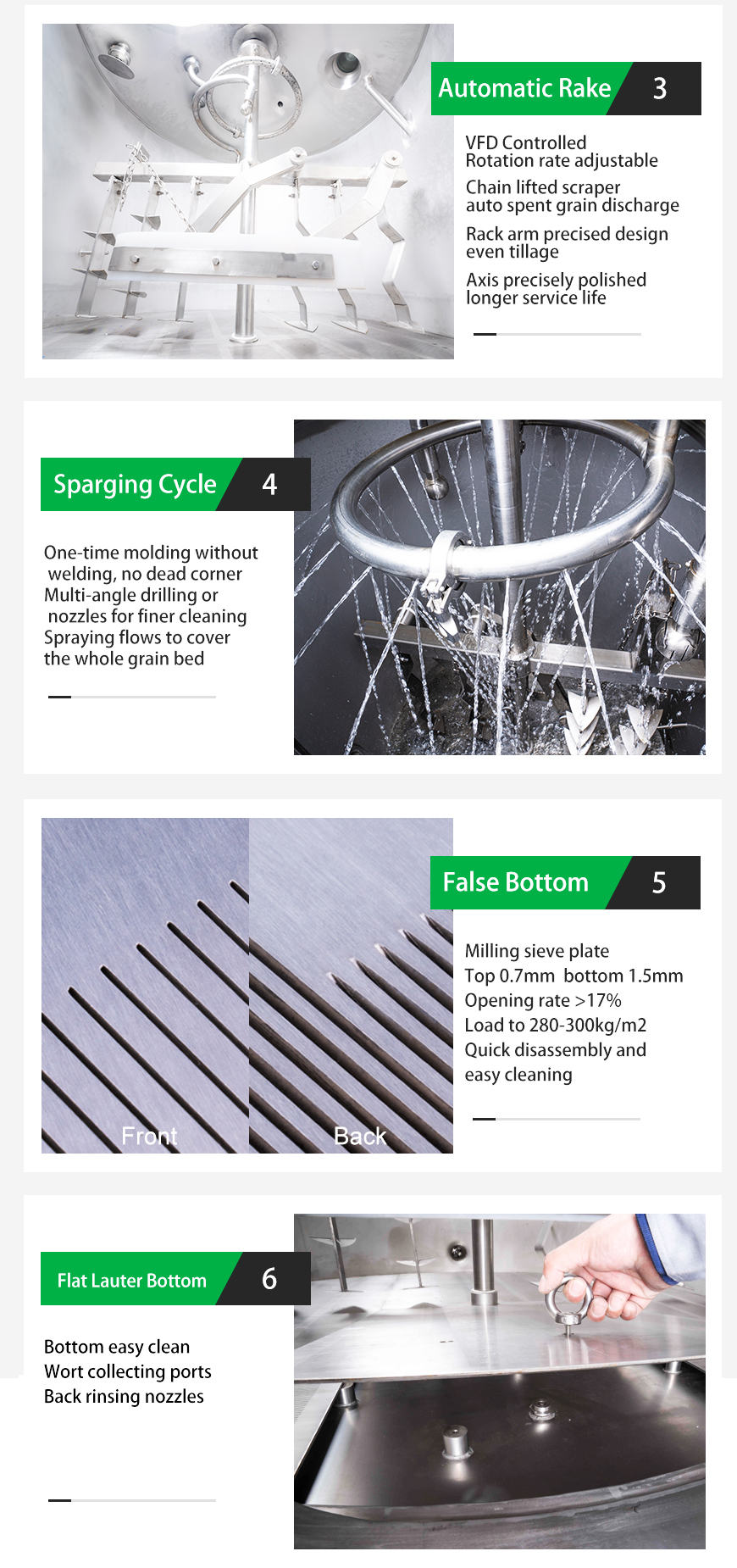
In processes like beer brewing, sparging refers to rinsing the grain bed with additional water after the main extraction to recover remaining sugars.
The goal is:
Increase extraction efficiency
Maximize yield
Recover residual soluble compounds
This concept naturally leads people to wonder if a similar step should be applied to coffee extraction.
2. How Cold Brew Extraction Works
Cold brew is fundamentally different from hot extraction or wort production.
Typical cold brew parameters:
Temperature: 4–25°C
Time: 8–24 hours
Grind size: coarse
Extraction method: immersion or slow percolation
Instead of aggressive extraction, cold brew relies on long contact time and gentle diffusion to dissolve:
Caffeine
Organic acids (lower than hot brew)
Sugars and flavor compounds
This results in a smoother, less acidic profile.
3. Why Sparging Is Generally Not Used
(1) Over-Extraction Risk
After a long steep, most desirable compounds are already extracted.
A sparging step would mainly pull out:
Bitter polyphenols
Harsh tannins
Woody or astringent flavors
This directly conflicts with the core goal of cold brew: smoothness and balance.
(2) Flavor Degradation
Cold brew is prized for:
Low acidity
Clean mouthfeel
Chocolatey, mellow notes
Sparging tends to extract late-stage compounds that:
Increase astringency
Flatten flavor complexity
Introduce undesirable bitterness
(3) Process Complexity vs. Benefit
Adding a sparging step requires:
Additional water control
More complex filtration
Longer processing time
But the gain is minimal:
Only a small increase in yield
Often at the cost of quality
For most producers, this trade-off is not worthwhile.
(4) Dilution Issues
Sparging introduces extra water into the system, which:
Lowers TDS (Total Dissolved Solids)
Reduces concentration of the final product
For businesses producing coffee concentrate, this is especially problematic, since concentration is a key value driver.

4. When Could a “Rinse Step” Make Sense?
While traditional sparging is not recommended, there are a few controlled scenarios where a light rinse may be considered:
(1) Industrial Extraction Optimization
In large-scale systems, a very mild rinse may be used to:
Improve overall extraction yield slightly
Reduce raw material cost
However, this must be carefully controlled to avoid flavor loss.
(2) Multi-Stage Extraction Systems
Some advanced setups use:
First stage: high-quality extract
Second stage: lower-grade extraction
The second extract might be:
Blended back in small amounts
Used for secondary products
This is closer to fractional extraction, not traditional sparging.
(3) High-TDS Concentrate Production
When targeting very high TDS (e.g., 30%+ concentrates), producers may:
Use staged extraction
Re-extract partially spent grounds
But again, this is a controlled process—not a simple rinse-through like in brewing.
5. Better Alternatives to Sparging
If your goal is to improve yield or efficiency, consider these instead:
Optimize Grind Size
Too coarse → under-extraction
Too fine → filtration issues
Adjust Brew Ratio
Typical: 1:4 to 1:8 (coffee : water)
Higher ratios increase TDS without needing a rinse
Extend Extraction Time
Increasing from 12h to 18–20h can improve yield
Without introducing harsh compounds (if controlled properly)
Use Agitation or Recirculation
Improves mass transfer
Increases extraction efficiency without over-extraction
Apply Multi-Stage Extraction
More controlled and scalable than sparging
Maintains product quality
6. Key Takeaway
Cold brew coffee is not beer—and coffee grounds are not grain.
While sparging is essential in brewing, applying the same concept to cold brew is generally unnecessary and even harmful to quality.
In most cases:
Skip sparging
Focus on extraction control
Prioritize flavor over marginal yield gains
For cold brew coffee production, especially at commercial scale, the goal is not to extract everything—but to extract the right things.
Sparging may increase yield slightly, but it often compromises the very characteristics that make cold brew desirable. A well-designed extraction process will always outperform a forced recovery step.
If you are designing a cold brew system or scaling up production, it’s better to invest in process optimization, filtration, and consistency control rather than adding unnecessary steps like sparging.
Edited By Daisy
[email protected]