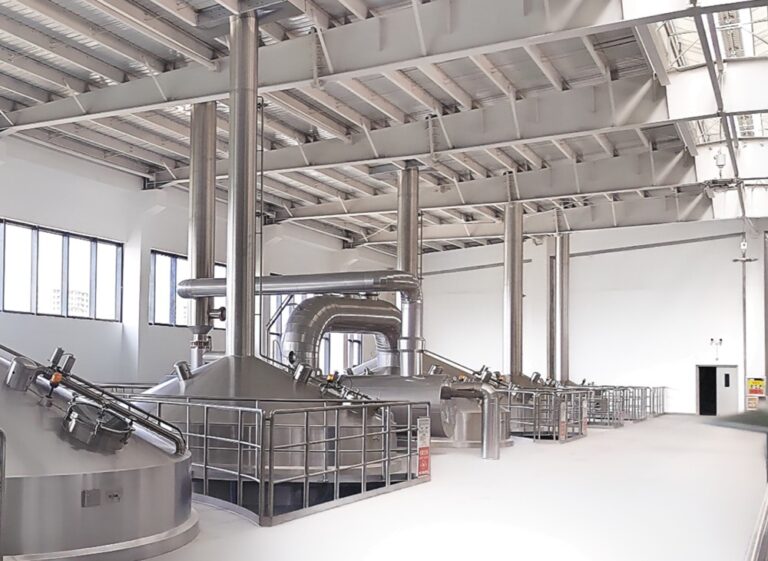
En la elaboración de cerveza, la claridad del mosto durante la fase de maceración y filtración desempeña un papel fundamental en la calidad final de la cerveza. Un mosto turbio o velado durante la filtración puede provocar un rendimiento deficiente de la fermentación, una calidad inestable de la cerveza, sabores indeseados y dificultades de filtración en las fases posteriores de la producción.
Entonces, ¿cómo pueden los cerveceros evitar los problemas de turbidez durante el proceso de filtración del macerado?
Este artículo analiza las principales causas de la turbidez del mosto durante el filtrado y ofrece soluciones prácticas para mejorar el rendimiento de la filtración y la claridad del mosto.
1. Controlar adecuadamente el proceso de fresado
La molienda de la malta es uno de los factores más importantes que influyen en la filtración del mosto.
Si la malta es molido demasiado fino, un exceso de partículas de harina puede obstruir el lecho de grano, reducir la velocidad de filtración y aumentar la turbidez.
Si la malta es molido demasiado grueso, la eficiencia de extracción podría disminuir.
Práctica recomendada:
- Conserva la estructura de la cáscara en la medida de lo posible.
- Consigue una trituración equilibrada: lo suficientemente fina para una buena extracción y lo suficientemente gruesa para una filtración eficaz.
- Utiliza un molino de malta de dos rodillos o regulable para lograr una mayor uniformidad.
Objetivo típico de trituración de la malta:
- Cáscara: prácticamente intacta
- Endospermo: correctamente desmenuzado
- Formación mínima de polvo
Una buena molienda crea un lecho filtrante natural durante el filtrado.
2. Optimizar la temperatura del macerado y la actividad enzimática
Unas temperaturas inadecuadas durante la maceración pueden provocar una conversión incompleta del almidón y un exceso de residuos proteicos, lo que contribuye a que la cerveza presente turbidez.
Aspectos clave a tener en cuenta en relación con la temperatura:
Reposo proteico (45–55 °C / 113–131 °F)
Ayuda a descomponer el exceso de proteínas que puede provocar turbidez.
Fase de sacarificación (62–68 °C / 144–154 °F)
Favorece la conversión del almidón en azúcares fermentables.
Mash-Out (76–78 °C / 169–172 °F)
Reduce la viscosidad del mosto y mejora la eficacia de la filtración.
Evita estos problemas habituales:
- Conversión incompleta del almidón
- Proteínas con un peso molecular excesivamente elevado
- Consistencia del puré demasiado espesa
Realizar un prueba del yodo Realizar esta operación antes del filtrado puede ayudar a comprobar que la conversión del almidón se ha completado.

3. Mantener una consistencia adecuada del puré
La consistencia del puré influye de manera significativa en el rendimiento de la filtración.
Un puré demasiado espeso puede provocar:
- Alta viscosidad
- Flujo lento del mosto
- Lechos de grano compactados
- Aumento de la formación de neblina
Proporción de maceración recomendada:
Proporción habitual para la elaboración de cerveza:
1 kg de malta : 2,5–4 L de agua
La proporción óptima depende de:
- Estilo de cerveza
- Composición de la malta
- Diseño de equipos de elaboración de cerveza
Una consistencia equilibrada del puré favorece una separación homogénea del mosto.

4. Formar y proteger el lecho de grano durante el filtrado
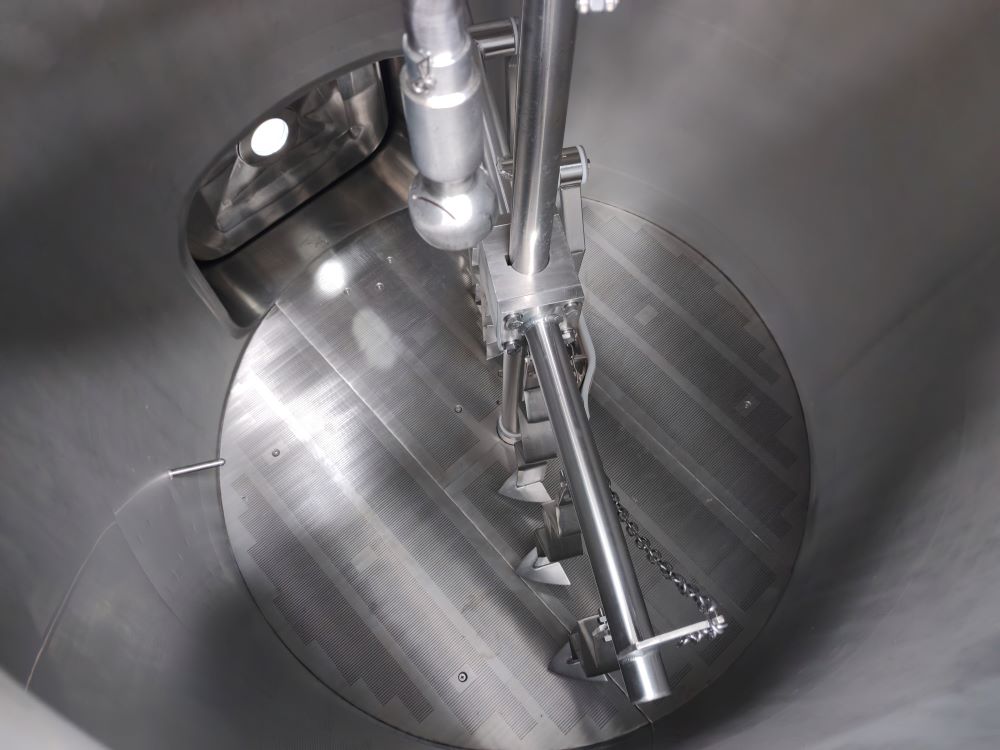
El lecho de grano actúa como sistema de filtración natural de la cervecería.
Si se altera el lecho de grano, pueden producirse canalizaciones o arrastre de partículas, lo que provocaría que el mosto quedara turbio.
Mejores prácticas de filtración:
- Al principio, recircula el mosto con suavidad (vorlauf).
- Empieza a escurrir poco a poco.
- Evita una velocidad excesiva de la bomba.
- Mantén unos niveles de líquido estables por encima del lecho de grano.
- Evita que el lecho de grano se hunda o se compacte.
Durante la primera fase de recirculación, el hecho de devolver el mosto turbio a la cuba de filtración permite que el lecho de grano se clarifique por sí solo.
5. Evita la agitación mecánica excesiva
Una agitación intensa tras el macerado puede destruir la estructura del lecho filtrante.
Esto es especialmente habitual cuando:
- Los rastrillos funcionan de forma demasiado agresiva.
- Las bombas funcionan a una velocidad excesiva.
- Las tuberías de transporte generan una fuerte turbulencia.
Consejos prácticos:
- Utiliza sistemas de mezcla de velocidad variable.
- Ajusta con cuidado la velocidad de remoción en la cuba de filtración.
- Reducir las perturbaciones mecánicas innecesarias.
Una manipulación cuidadosa ayuda a mantener la estabilidad de la filtración.
6. Control de la calidad de las materias primas
La composición de la materia prima influye directamente en la claridad del mosto.
Hay ciertos ingredientes que aumentan de forma natural la tendencia a la turbidez.
Ten en cuenta lo siguiente:
- Malta con alto contenido en proteínas
- Malta mal modificada
- Exceso de ingredientes complementarios sin maltear
- Mala calidad del almacenamiento de cereales
Cuando utilices trigo, avena, centeno o recetas con un alto porcentaje de ingredientes complementarios, ten en cuenta lo siguiente:
- Suplementación enzimática
- Descanso con betaglucano
- Programas de maceración modificados
Un alto contenido en betaglucano puede aumentar considerablemente la viscosidad del mosto y dificultar la filtración.

7. Utilizar equipos diseñados y mantenidos adecuadamente
Incluso los mejores procesos de elaboración de cerveza pueden verse afectados si el diseño de los equipos es inadecuado.
Factores importantes relacionados con el equipamiento:
- Diseño de ranura con fondo falso
- Geometría de Lauter
- Recogida uniforme del mosto
- Dimensionamiento de bombas
- Precisión en el control de la temperatura
El mantenimiento periódico es igual de importante.
Comprueba periódicamente lo siguiente:
- Fondos falsos bloqueados
- Pantallas dañadas
- Zonas de caudal irregular
- Errores de los sensores
El diseño fiable de los equipos garantiza un rendimiento constante de la filtración.
8. Controlar el pH durante todo el proceso de maceración
El pH del puré influye en el rendimiento enzimático, la coagulación de las proteínas y la claridad del mosto.
Rango de pH recomendado para el mosto:
5.2–5.6
Un pH incorrecto puede provocar:
- Actividad enzimática reducida
- Dificultad para metabolizar las proteínas
- Aumento de la formación de neblina
Los cerveceros suelen ajustar el pH utilizando:
- Sales para la elaboración de cerveza
- Ácido láctico
- Malta acidulada
Un control adecuado del pH mejora tanto la filtración como la estabilidad del sabor.
Para obtener un mosto claro, es fundamental llevar a cabo un proceso de maceración y filtración bien controlado. Para reducir al mínimo la turbidez durante la filtración del mosto, los cerveceros deben centrarse en:
✓ Molienda adecuada de la malta
✓ Control preciso de la temperatura del macerado
✓ Consistencia equilibrada del puré
✓ Filtración suave y estable
✓ Agitación controlada
✓ Materias primas de calidad
✓ Diseño de equipos fiable
✓ Control adecuado del pH

Al optimizar estos factores, las cervecerías pueden lograr una filtración más rápida, un mosto más claro, una mayor eficiencia de extracción y una calidad de la cerveza más constante. Tanto si gestionas una cervecería artesanal como una planta de elaboración industrial, dominar la filtración del mosto es esencial para producir una cerveza excepcional. En TIANTAI, ayudamos a las cervecerías a optimizar el diseño de la sala de cocción, la eficiencia de la maceración y el rendimiento de la filtración mediante soluciones de elaboración de cerveza a medida. ¿Te interesa mejorar tu sistema de elaboración de cerveza? No dudes en ponerte en contacto con nosotros para recibir asesoramiento profesional.
Editado por Daisy
[email protected]