Yeast is one of the most important raw materials in beer production. It directly influences fermentation performance, attenuation, flavor, aroma, flocculation, and overall beer consistency.
For a large commercial brewery, however, the question is not simply “How do we get enough yeast?” but rather:
Should the brewery propagate fresh yeast in-house, collect and reuse yeast from fermenters, or operate both systems as part of an integrated yeast management strategy?
A 효모 번식 시스템 및 Yeast Collection/Harvesting System serve fundamentally different purposes.
간단히 말해서
Yeast Propagator = Grow more yeast
Yeast Collection System = Recover and reuse existing yeast
Understanding this difference is essential when designing a large-scale brewery.
What Is a Yeast Propagation System?
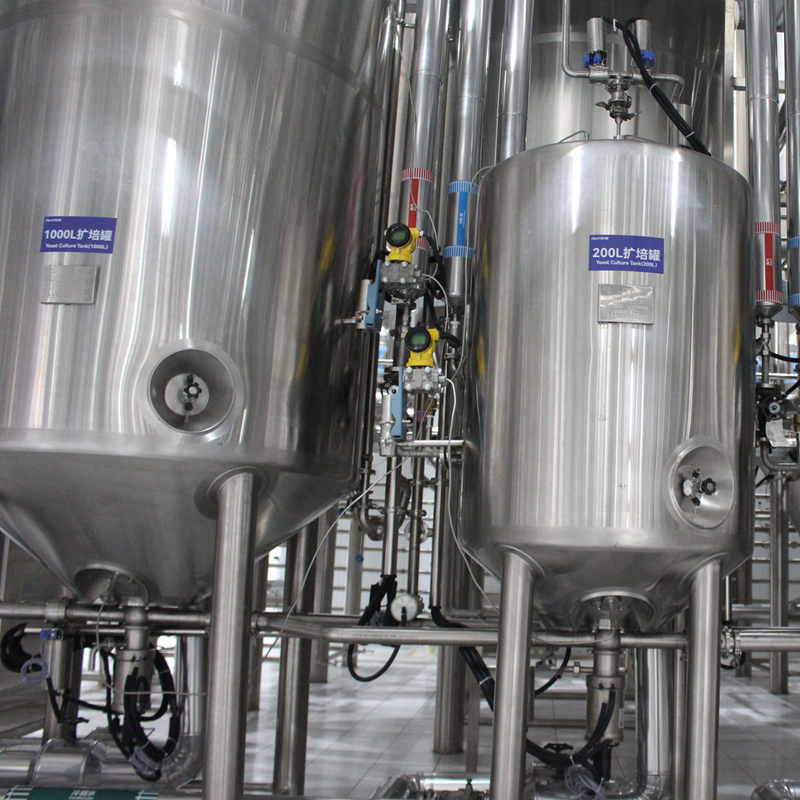
A 효모 번식 시스템 is designed to grow a relatively small amount of pure yeast culture into a much larger quantity of active pitching yeast.
The propagation process normally starts with a controlled yeast culture obtained from a laboratory, yeast supplier, or the brewery’s own yeast bank.
The yeast is introduced into sterile wort and provided with carefully controlled conditions for growth.
A typical process is:
Pure Yeast Culture → Sterile Wort → Yeast Propagator → Aeration/Oxygenation → Yeast Growth → Yeast Propagation → Pitching Yeast
Unlike fermentation, the primary objective during propagation is to increase yeast biomass while maintaining high yeast viability and vitality.
Commercial propagation systems commonly provide controlled aeration, temperature, mixing, pressure, and hygienic conditions. Industrial systems can also incorporate automatic monitoring and sterile process connections.
What Is Yeast Collection or Yeast Harvesting?
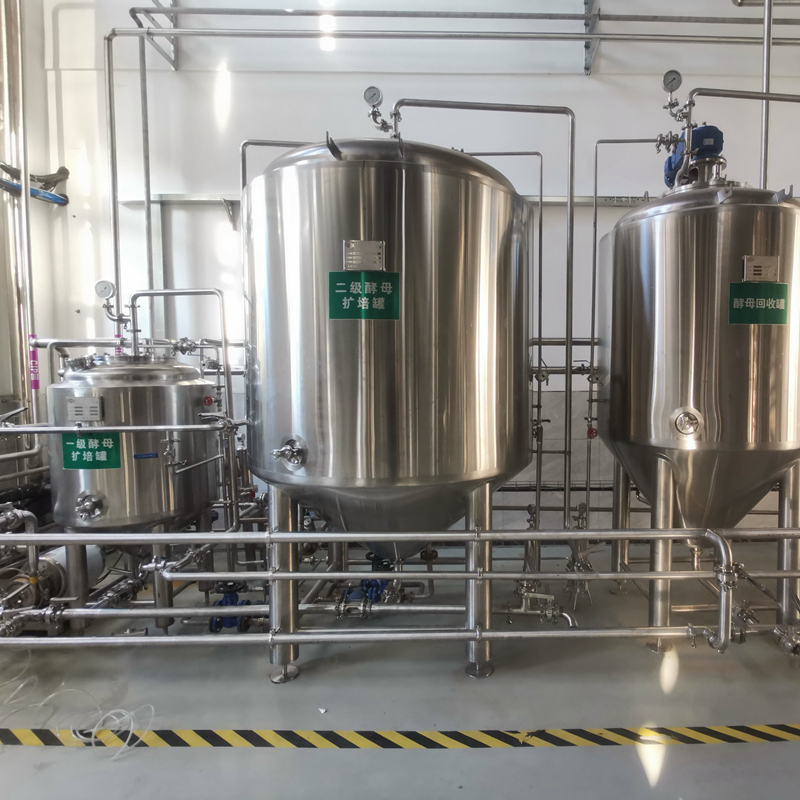
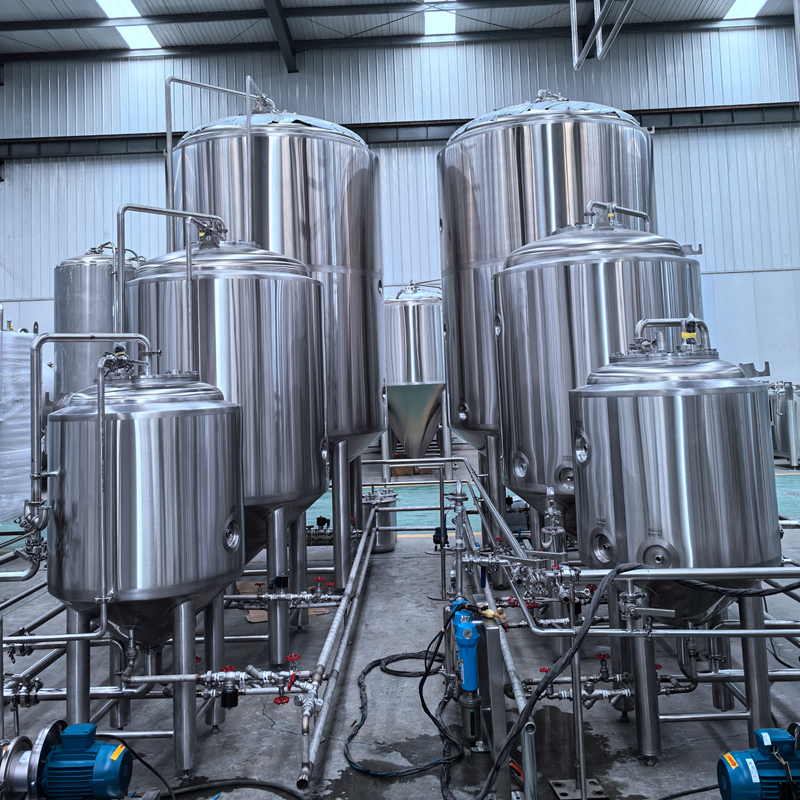
A Yeast Collection System is designed to recover yeast that has already completed a fermentation and settled in the cone of a cylindroconical fermenter.
During fermentation, yeast multiplies and eventually settles at the bottom of the fermenter.
The brewer can remove the yeast slurry through the bottom outlet and transfer it to a sanitized Yeast Collection Tank, Yeast Brink, or Yeast Storage Tank.
The basic process is:
Fermentation → Yeast Settling → Cone Dump → Yeast Collection → Quality Control → Cold Storage → Repitching
This is often called cropping, harvesting, or yeast recovery.
Bottom cropping from conical fermenters is widely used in commercial brewing because viable yeast can be recovered and reused for subsequent fermentations.
Yeast Propagation vs. Yeast Collection
The fundamental difference is very simple:
| 항목 | Yeast Propagator | Yeast Collection System |
|---|---|---|
| Main Purpose | Grow yeast | Recover yeast |
| Starting Material | Pure yeast culture | Fermented beer yeast |
| Yeast Growth | 예 | No intentional growth |
| 폭기 | Usually required | Normally minimized |
| Source | Lab / yeast supplier / yeast bank | Fermenter cone |
| Main Benefit | Fresh, controlled yeast supply | Cost reduction and yeast reuse |
| Typical Use | New strain / restart / high-demand periods | Routine production |
| 장비 비용 | 더 높음 | Lower |
| Process Complexity | 더 높음 | Lower |
| Contamination Control | Critical | Critical |
| Large Brewery Importance | Strategic | 필수 |
This distinction is important because a Yeast Collection Tank is not a substitute for a true Yeast Propagator when the brewery needs to actively grow a new yeast culture. Likewise, a large brewery does not necessarily need to propagate yeast for every batch if healthy cropped yeast is already available.
Why Large Breweries Prefer Yeast Collection and Repitching?
For high-volume beer production, yeast reuse can provide significant economic and operational advantages. Instead of purchasing fresh yeast for every fermentation, the brewery can harvest healthy yeast from one fermentation and use it to inoculate subsequent batches.
예를 들어 Batch 1 → Harvest Yeast → Batch 2 → Harvest Yeast → Batch 3 → Harvest Yeast → Batch 4
This creates a controlled yeast reuse program. Under appropriate conditions, breweries may reuse yeast for multiple generations, although the acceptable number of generations depends on yeast strain, brewery process, sanitation, storage conditions, quality-control results, and beer style. Industry guidance commonly discusses ranges such as 5–10 generations, but there is no universal number suitable for every brewery. The brewery should monitor yeast health rather than relying only on a fixed generation number.
Major Advantages of Yeast Collection
1. Lower Yeast Cost
The biggest advantage is economic. A brewery can recover yeast that would otherwise become waste and use it as pitching yeast for subsequent fermentations. This can substantially reduce the amount of purchased yeast required.
2. Consistent House Yeast
Once a brewery has established a stable yeast strain and controlled repitching program, yeast harvesting can help maintain consistent fermentation characteristics. This is particularly useful for core beer brands produced continuously.
3. Simple Process
Compared with full yeast propagation, yeast collection is relatively straightforward. The brewery mainly needs:
- Sanitary fermenter cone
- Yeast outlet
- Yeast collection tank/brink
- Sanitary transfer piping
- 콜드 스토리지
- Yeast quality-control procedures
4. High Utilization of Brewery Resources
Instead of treating yeast as waste, the brewery turns yeast into a reusable production resource. This supports a more efficient and sustainable brewing operation.
What Are the Limitations of Yeast Collection?
Although yeast harvesting is highly useful, it is not a complete solution for every brewery.
1. The Brewery Depends on Fermentation to Generate Yeast
A collection system cannot create yeast from nothing. The brewery must already have an active fermentation process producing sufficient yeast biomass.
2. Yeast Quality Can Vary
Harvested yeast may contain:
- Trub
- 홉 입자
- Beer residues
- Dead cells
- Stress-related metabolites
Therefore, harvesting timing and yeast quality control are important. Yeast collection is ideally performed when healthy yeast has settled and before prolonged exposure to unfavorable conditions. Proper sanitation and storage are also essential.
3. Yeast Generation Management Is Required
Repeated repitching can eventually lead to changes in yeast performance. Brewers should monitor:
- Viability
- Vitality
- Cell concentration
- 발효 성능
- Attenuation
- Flocculation
- Flavor profile
- Microbiological contamination
When the yeast no longer meets the brewery’s specifications, it should be replaced with a fresh culture.
Why Would a Large Brewery Need a Yeast Propagator?
A large brewery may already harvest substantial quantities of yeast, so why invest in a propagation system? There are several important reasons.
1. Introducing a New Yeast Strain
When launching a new beer style, the brewery may need a completely different yeast strain. For example:
- Lager yeast
- American ale yeast
- Belgian yeast
- Saison yeast
- Specialty ale yeast
The brewery may receive only a relatively small quantity of pure culture. A propagation system allows the brewery to increase the quantity of that culture to the required pitching volume.
2. Rebuilding a Yeast Culture
Even an established commercial brewery may periodically need to restart its yeast program. If harvested yeast becomes contaminated or loses desirable characteristics, the brewery can return to a controlled original culture and propagate fresh pitching yeast. This provides an important backup strategy.
3. Supporting Multiple Yeast Strains
Large breweries often produce multiple beer brands. One production schedule may require several different yeast strains. A dedicated propagation system provides greater flexibility for managing different cultures under controlled conditions.
4. Supporting Production Peaks
Production demand is not always constant. During peak seasons, a brewery may need significantly more yeast than its normal harvesting program can provide. Propagation can supplement the available harvested yeast and help the brewery maintain production schedules.
Yeast Propagation Requires More Process Control
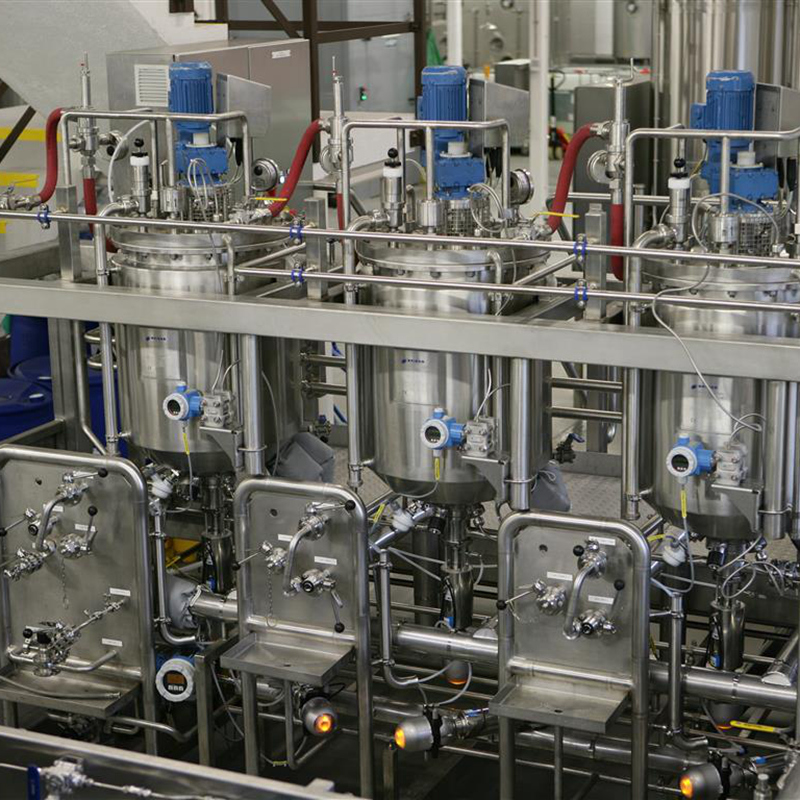
A commercial yeast propagator is more than just a stainless steel tank. The objective is to create a controlled environment where yeast can reproduce rapidly while maintaining high vitality and microbiological security. Typical components may include:
- 효모 번식 탱크
- Sterile wort supply
- Wort sterilization or pasteurization system
- Sterile air or oxygen supply
- Aeration system
- Gentle agitator or recirculation system
- 온도 제어
- 압력 제어
- Sampling system
- CIP 시스템
- SIP/sterilization options
- PLC 제어
- Oxygen measurement
- Yeast cell monitoring
Commercial propagation systems are specifically designed to maintain hygienic conditions and controlled aeration during yeast growth.
Yeast Collection Equipment for Large Breweries
A large commercial brewery normally needs a much simpler but highly hygienic yeast collection system. A typical configuration can include:
Yeast Collection Tank
A sanitary stainless steel tank receives yeast slurry from fermentation tanks. The tank can be equipped with:
- 쿨링 재킷
- 압력 게이지
- 안전 밸브
- Sanitary sampling valve
- CIP 스프레이 볼
- CO₂ connection
- Yeast inlet
- Yeast outlet
- 사이트 글라스
- 온도 센서
Yeast Transfer Pump
A sanitary low-shear pump can transfer yeast between fermenters, collection tanks, and pitching points. Gentle yeast handling is important to minimize unnecessary stress on the cells.
Yeast Storage
Collected yeast should be stored under controlled conditions and protected from contamination and excessive oxygen exposure.
Yeast Pitching System
The collected yeast can then be transferred to the next fermentation tank according to the brewery’s pitching specification.
The Best Solution for a Large Commercial Brewery: Use Both
For many large breweries, the answer should not be: Yeast Propagator OR Yeast Collection
Instead, the better strategy can be: Yeast Propagator + Yeast Collection + Yeast Storage + Yeast Quality Control
These systems perform different roles. A simplified brewery yeast management system could look like:
Pure Yeast Culture
↓
Yeast Propagator
↓
Fresh High-Vitality Pitching Yeast
↓
발효 탱크
↓
Yeast Settling
↓
Yeast Collection Tank
↓
Yeast Quality Control
↓
Yeast Storage
↓
Repitching
↓
Next Fermentation
The propagator provides a controlled source of fresh yeast. The collection system recovers yeast from normal production. The brewery can therefore use propagation strategically while relying primarily on yeast harvesting for routine production.
Which System Should a Large Brewery Invest In First?
This depends on the brewery’s production model.
Scenario 1: One Main Beer Brand, Stable Yeast Strain
If the brewery produces a large volume of the same beer using one stable yeast strain, a Yeast Collection and Storage System may provide the highest immediate return. The brewery can continuously harvest and repitch healthy yeast.
Scenario 2: Multiple Beer Brands and Yeast Strains
If the brewery produces many beer styles with different yeast strains, a 효모 번식 시스템 becomes more valuable. It provides flexibility to establish and maintain multiple yeast cultures.
Scenario 3: Very Large Industrial Brewery
For a large-scale brewery with high production volume, multiple fermentation areas, several yeast strains, and strict quality requirements, an integrated system is generally the most robust solution:
Yeast Propagation + Yeast Collection + Yeast Storage + Yeast QC
Scenario 4: Brewery Expanding Production
If the brewery is currently using purchased yeast but is rapidly increasing production, a staged approach can be considered.
First: Yeast Collection Tank + Yeast Storage
Later: 효모 번식 시스템
This allows the brewery to improve yeast utilization without immediately making a large investment in propagation equipment.
Yeast Collection Is Not the Same as Yeast Propagation
This is one of the most important points for brewery equipment buyers.
Yeast Collection:
Collects yeast that has already grown during fermentation.
효모 번식:
Actively grows yeast under controlled conditions to produce a larger quantity of pitching yeast.
A collection tank does not replace a propagation plant. A propagation tank does not necessarily replace a collection system.
They solve two different problems. Modern brewery yeast-management systems therefore often treat propagation, harvesting, storage, pitching, and quality monitoring as connected parts of one overall process.
TIANTAI Yeast Management Solutions for Commercial Breweries
TIANTAI can provide customized yeast management equipment for breweries ranging from craft breweries to large commercial production facilities.
Yeast Collection Tank
Designed for collecting and storing harvested yeast from fermentation tanks. Typical features include:
- SS304 or SS316L stainless steel
- 쿨링 재킷
- Sanitary valves
- CO₂ connection
- 압력 게이지
- 샘플링 밸브
- CIP 스프레이 볼
- 온도 센서
- Conical or optimized bottom design
- Sanitary yeast transfer outlet
효모 번식 탱크
Designed for controlled yeast growth. Possible configurations include:
- Sterile wort inlet
- Sterile air/O₂ aeration
- Gentle agitation
- 냉각 시스템
- 온도 모니터링
- 압력 제어
- CIP/SIP
- 샘플링 포트
- PLC/HMI control
- Oxygen monitoring
Complete Yeast Management System
For large breweries, TIANTAI can integrate:
Yeast Propagation → Yeast Collection → Yeast Storage → Yeast Pitching
with the brewery’s existing fermentation and brewhouse systems.
Final Conclusion
For a large commercial brewery, Yeast Propagation and Yeast Collection should not be considered competing technologies. They have different functions.
Yeast Collection is primarily a production-efficiency tool. It allows the brewery to recover healthy yeast from completed fermentations and reuse it in subsequent batches.
효모 번식 is primarily a yeast-supply and culture-management tool. It allows the brewery to grow a controlled yeast culture when additional biomass is required or when a fresh culture needs to be established.
For routine high-volume production with a stable house yeast, yeast collection and repitching can be highly economical. For breweries managing multiple yeast strains, new product development, production peaks, or culture renewal, propagation provides additional flexibility and control.
For a large commercial brewery, the most complete strategy is often:
Fresh Culture → Yeast Propagation → Fermentation → Yeast Collection → Quality Control → Yeast Storage → Repitching
In other words:
Propagate when you need to grow yeast.
Collect when you want to reuse yeast.
Manage both when you want maximum control over your brewery’s yeast program.
TIANTAI can design a customized Yeast Propagation and Yeast Collection System based on brewery capacity, fermentation volume, number of yeast strains, pitching rate, production schedule, and level of automation.
Daisy email: [email protected]