As the global demand for kombucha continues to rise, producers are facing a critical challenge: how to ensure microbiological stability while preserving flavor, carbonation, and the functional properties that define the product. For large-scale operations using PET bottles, tunnel pasteurization has become one of the most reliable and scalable solutions.
This article provides a comprehensive overview of tunnel pasteurization for kombucha filled in PET bottles, including process principles, temperature control, product safety considerations, and engineering best practices.
1. Why Pasteurize Kombucha After PET Bottling?
Kombucha is a fermented tea beverage produced by fermenting sweetened tea with a SCOBY (Symbiotic Culture of Bacteria and Yeast). Even after primary fermentation, residual yeast and bacteria remain active in the finished beverage.
If kombucha is filled into bottles without stabilization, several issues may arise: Continued fermentation in package, Excessive CO₂ production, Over-carbonation and bottle deformation, Flavor drift, Alcohol increase beyond legal limits, Microbial instability during distribution.
For PET bottle packaging, this becomes especially critical because PET has lower heat resistance and structural strength compared to glass.
Tunnel pasteurization offers a controlled way to stabilize the product after filling and sealing, ensuring consistent shelf life and safety.
2. What Is a Tunnel Pasteurizer?
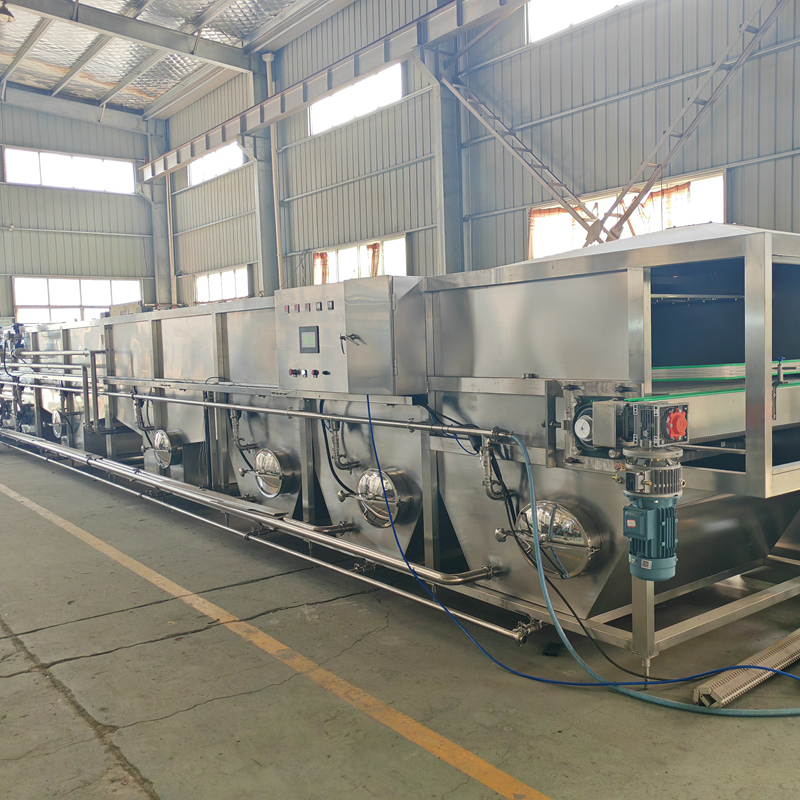
A tunnel pasteurizer is a continuous thermal processing system used after bottling. Sealed bottles pass through multiple temperature-controlled spray zones inside a long stainless-steel chamber.
Unlike flash pasteurization (which heats product before filling), tunnel pasteurization treats the beverage inside the final sealed container.
The system typically includes: Pre-heating zones, Heating zones, Holding zones, Cooling zones, Water recirculation pumps, Heat exchangers, Temperature sensors, Conveyor system.
This step ensures that all microorganisms inside the sealed bottle are reduced to safe levels.
3. Pasteurization Units (PU) in Kombucha Processing
Tunnel pasteurization effectiveness is measured in Pasteurization Units (PU).
1 PU = holding product at 60°C for 1 minute.
For kombucha, typical target values range from: 5–15 PU for mild stabilization, 15–30 PU for full shelf stability.
The exact PU target depends on:Residual yeast count, Desired shelf life, Alcohol control requirements, Distribution temperature conditions, Whether the product is “raw” or “pasteurized” labeled.
Most commercial shelf-stable kombucha in PET bottles targets 15–25 PU.
4. Typical Tunnel Pasteurization Temperature Profile for PET Bottles
PET bottles require gradual heating and cooling to avoid deformation or collapse.
A typical temperature curve may look like this:
Pre-heating zone: 30–40°C for 3–5 minutes
Purpose: Prevent thermal shock
Heating zone: 55–65°C for 5–10 minutes
Product core temperature gradually rises
Holding zone:60–62°C equivalent exposure
Achieve required PU
Cooling zone 1: 40–45°C
Cooling zone 2: 25–30°C
Final bottle exit temperature: Approximately 30°C
Sudden temperature changes must be avoided because PET bottles soften at high temperatures (typically above 70°C).
5. Special Considerations for PET Bottle Kombucha
5.1 Bottle Strength
Carbonated kombucha in PET requires pressure-resistant bottles. Heat exposure combined with internal CO₂ pressure can distort weak containers.
Recommended: Heat-resistant PET design, Adequate wall thickness, Pressure rating for 2.0–3.0 volumes CO₂
5.2Carbonation Control Before Pasteurization
Before entering the tunnel: CO₂ levels should be stable, Residual fermentation must be predictable, Dissolved oxygen should be minimized.
Excess yeast activity during heating can increase internal pressure. Therefore, many producers perform light filtration before filling to reduce yeast load.
5.3 Alcohol Management
In markets like the United States, kombucha must stay below 0.5% ABV to qualify as non-alcoholic.
If kombucha is not pasteurized, continued fermentation during storage can increase alcohol.
Tunnel pasteurization stops yeast activity, helping producers remain compliant with regulatory authorities such as the U.S. Food and Drug Administration.
6. Microbiological Safety in Kombucha
Although kombucha is acidic (typically pH 2.8–3.5), it can still contain: Wild yeast, Acetic acid bacteria, Lactic acid bacteria, Contamination from filling environment.
Tunnel pasteurization ensures: Yeast inactivation, Fermentation stop, Extended shelf life, Reduced product recalls.
For commercial distribution across long distances and warm climates, pasteurization is strongly recommended.
7. Advantages of Tunnel Pasteurization for Kombucha in PET Bottles
- Final Package Safety: Since bottles are sealed before pasteurization, no post-process contamination can occur.
- Shelf Stability: Products can be stored at room temperature without refermentation.
- Alcohol Control: Fermentation is stopped, preventing ABV increase.
- Reduced Exploding Bottles Risk: By eliminating yeast activity, pressure remains stable.
- Suitable for High-Volume Production: Tunnel pasteurizers can be designed for: 3,000 bottles/hour; 6,000 bottles/hour; 10,000+ bottles/hour
8.Engineering Design Considerations
When designing a tunnel pasteurizer for kombucha, consider: Production Capacity, Match conveyor speed with filling line output.
Bottle Size
Common PET sizes:250 ml, 330 ml, 500 ml, 1 L
Water Consumption
System includes recirculated spray water with heat recovery.
Steam Requirement
Steam heating through plate heat exchangers.
Automation PLC control system with: Temperature recording, PU calculation, Alarm system, CIP cleaning cycle.
9. Comparison: Tunnel Pasteurization vs Flash Pasteurization
| Item | Tunnel Pasteurization | Flash Pasteurization |
| Process Location | After filling | Before filling |
| Package Treatment | Yes | No |
| Risk of Contamination | Low | Medium |
| Suitable for PET | Yes | Yes |
| Equipment Cost | Higher | Moderate |
| Flavor Impact | Slight | Slight |
Tunnel pasteurization is often preferred when: Shelf stability is required, Export markets are targeted, Alcohol compliance is critical
Flash pasteurization may be chosen when: Live cultures marketing is not required, Filling environment is ultra-hygienic.
10. Does Tunnel Pasteurization Destroy Probiotics?
Yes. Tunnel pasteurization inactivates most live cultures.
If a brand markets kombucha as “raw” or “contains live probiotics,” tunnel pasteurization is not suitable.
However, many large commercial kombucha brands choose stability over live cultures and may add post-pasteurization probiotics in controlled formats.
11. Common Operational Challenges
Bottle Deformation
Caused by: Excessive heating, Weak PET structure, High internal pressure
Solution: Gradual temperature ramping and pressure-rated bottles.
Over-Pasteurization
Too high PU may cause: Flavor loss, Color darkening, Tea aroma reduction
Solution: Accurate PU calculation and data logging.
Uneven Heating Due to: Incorrect spray pressure, Poor water circulation, Conveyor misalignment
Solution: Engineering validation and temperature mapping.
12. Recommended Process Flow for PET Kombucha with Tunnel Pasteurization
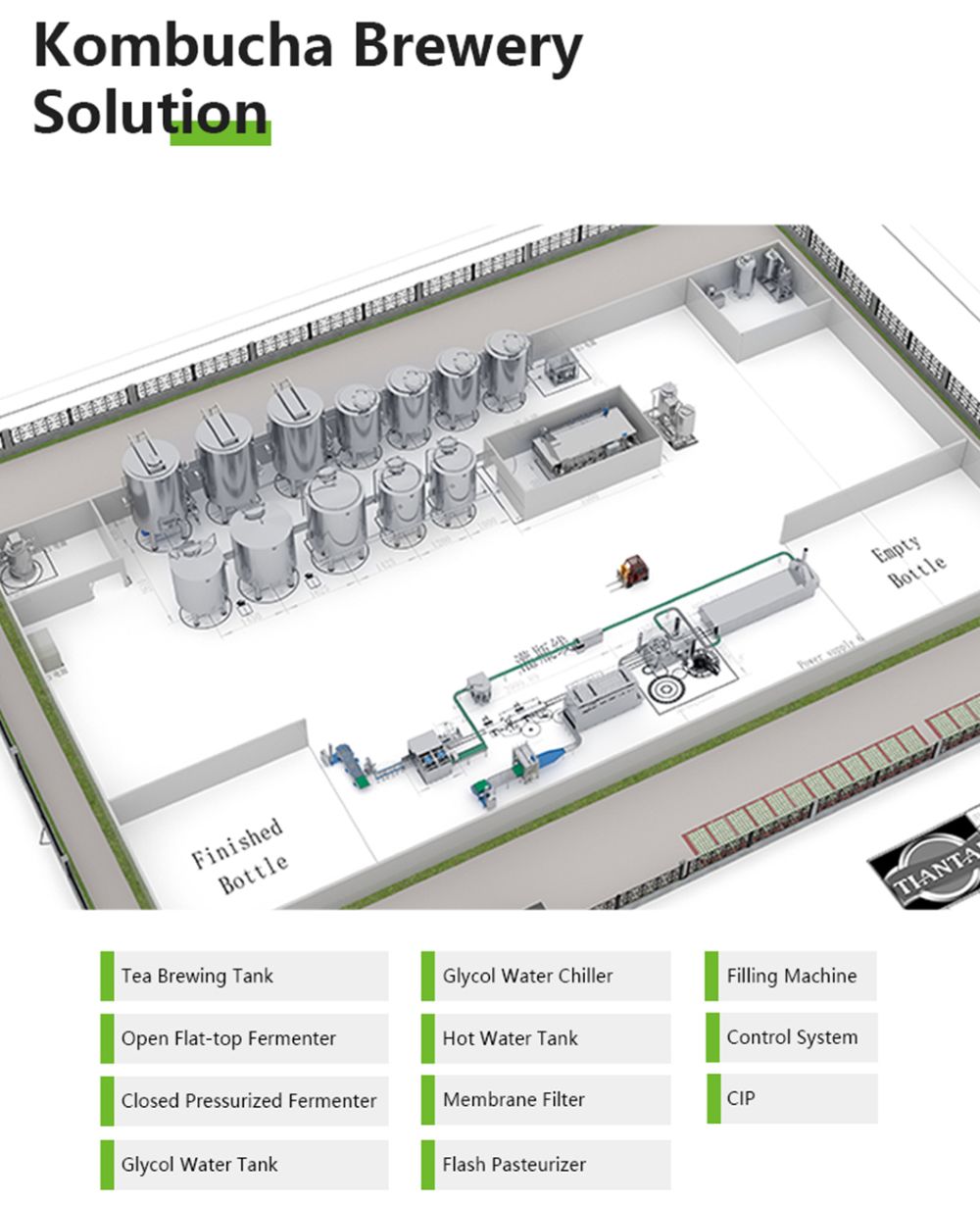
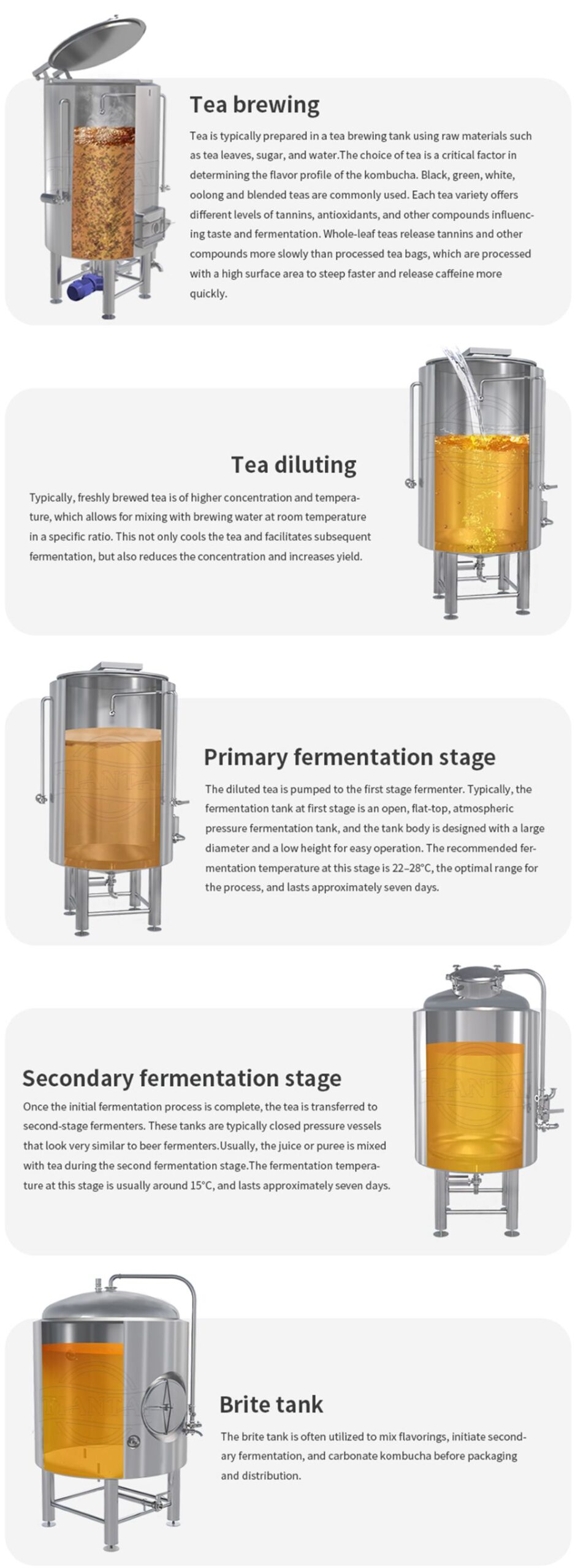
Tea extraction
Sugar dissolution
Fermentation
Maturation
Filtration (optional)
Carbonation adjustment
PET bottle filling
Capping
Tunnel pasteurization
Cooling
Labeling
Packaging
This configuration ensures product consistency and long shelf life.
13. Sustainability Considerations
Modern tunnel pasteurizers are designed with: Heat recovery systems, Multi-stage water reuse, Insulated chambers, Variable frequency drive pumps, Energy-saving spray nozzles.
Energy optimization significantly reduces operational costs in high-capacity kombucha plants.
14. How to Select the Right Tunnel Pasteurizer for Kombucha?
When planning a project, producers should define: Daily production volume, Bottle size and shape, Required PU value, Distribution environment, Carbonation level, Regulatory requirements, Available steam and water capacity, Floor space.
A properly engineered tunnel pasteurizer ensures safe, stable, and compliant kombucha products while protecting PET packaging integrity.
Tunnel pasteurization has become a core technology for commercial kombucha producers using PET bottles. By carefully controlling temperature profiles and pasteurization units, manufacturers can stop fermentation, maintain alcohol compliance, prevent bottle deformation, and guarantee shelf stability.
While it eliminates live cultures, it provides the operational reliability needed for large-scale distribution.
For growing kombucha brands targeting national or international markets, investing in a properly designed tunnel pasteurization system is not just an option—it is a strategic decision for quality assurance and long-term brand protection.
If you are planning a new kombucha production line or upgrading an existing PET filling system, tunnel pasteurization should be evaluated as a critical stabilization step in your process design.



Edited by Daisy
[email protected]