¿Por qué el alcohol extra neutro (ENA) es la base perfecta para la ginebra? La ginebra es una de las bebidas espirituosas más versátiles y de más rápido crecimiento del mundo. A diferencia del whisky o el ron, la ginebra no requiere años de envejecimiento. Su sabor único proviene principalmente de los botánicos cuidadosamente seleccionados, más que del propio alcohol base.
Para la mayoría de las destilerías comerciales, el alcohol extra neutro (ENA) es la materia prima preferida, ya que ofrece una base excepcionalmente limpia que permite que los aromas botánicos destaquen.
Tanto si vas a lanzar una marca de ginebra artesanal como si vas a ampliar una destilería ya existente, es fundamental comprender cómo se elabora la ginebra a partir de ENA para crear un producto de alta calidad.
¿Qué es el alcohol extra neutro (ENA)?
El alcohol extra neutro (ENA) es etanol altamente purificado que suele contener 95–961 TP3T de alcohol por volumen (ABV). Se destila varias veces para eliminar impurezas, congéneres y sabores no deseados.
El ENA puede obtenerse a partir de diversas materias primas agrícolas, entre las que se incluyen:
- Trigo
- Maíz
- Cebada
- Centeno
- Melaza de caña de azúcar
- Remolacha azucarera
- Patatas
Dado que el ENA es prácticamente insípido e inodoro, resulta el alcohol base ideal para la elaboración de ginebra.
¿Por qué los destiladores eligen ENA?
El uso de ENA ofrece varias ventajas:
| ♦Calidad constante | Cada lote se elabora a partir de la misma base de alcohol puro, lo que garantiza la uniformidad del producto. |
| ♦Producción más rápida | A diferencia del whisky, la ginebra elaborada a partir de ENA no requiere un proceso prolongado de fermentación ni de maduración. |
| ♦Recetas botánicas versátiles | Dado que la ENA apenas aporta sabor, los destiladores tienen total libertad para crear perfiles botánicos únicos. |
| ♦Menor coste de producción | La compra o la producción de ENA reduce el tiempo de producción sin dejar de garantizar una excelente calidad del licor. |
El proceso de elaboración de la ginebra
Paso 1. Diluir el ENA
El ENA comercial (95–96% ABV) se diluye con agua purificada hasta alcanzar aproximadamente 40–60% ABV antes de la extracción botánica.
La dilución exacta depende de:
- Método de destilación
- Receta botánica
- Intensidad de sabor deseada
Paso 2. Selecciona los ingredientes botánicos
Las bayas de enebro son un ingrediente obligatorio por ley en la ginebra, pero se pueden utilizar muchos otros ingredientes botánicos para crear estilos característicos.
Entre los ingredientes botánicos más comunes se encuentran:
- Bayas de enebro
- Semillas de cilantro
- Raíz de angélica
- Raíz de iris
- Cardamomo
- Canela
- Corteza de casia
- Cáscara de limón
- Cáscara de naranja
- Cáscara de pomelo
- Lavanda
- Manzanilla
- Raíz de regaliz
- Pimienta de cubeba
- Pimienta rosa
- Pétalos de rosa
Una receta botánica bien equilibrada es la clave de toda ginebra de éxito.
Paso 3. Extracción botánica
Existen varios métodos para extraer aromas botánicos.
Maceración
Las plantas se dejan en remojo directamente en ENA diluido durante 12-48 horas antes de la destilación.
Ventajas:
- Extracción de un sabor intenso
- Marcado carácter botánico
- Elaboración tradicional de la ginebra London Dry
Infusión de vapor
Los botánicos se colocan dentro de una cesta de ginebra situada sobre el licor hirviendo. Los vapores de alcohol atraviesan los botánicos, extrayendo suavemente los aceites esenciales.
Ventajas:
- Aroma elegante
- Notas frescas de cítricos
- Acabado liso
- Menor amargor
Método combinado
Muchos productores de ginebra de alta gama combinan la maceración con la infusión al vapor para conseguir una mayor complejidad y equilibrio en el sabor.
Paso 4. Destilación
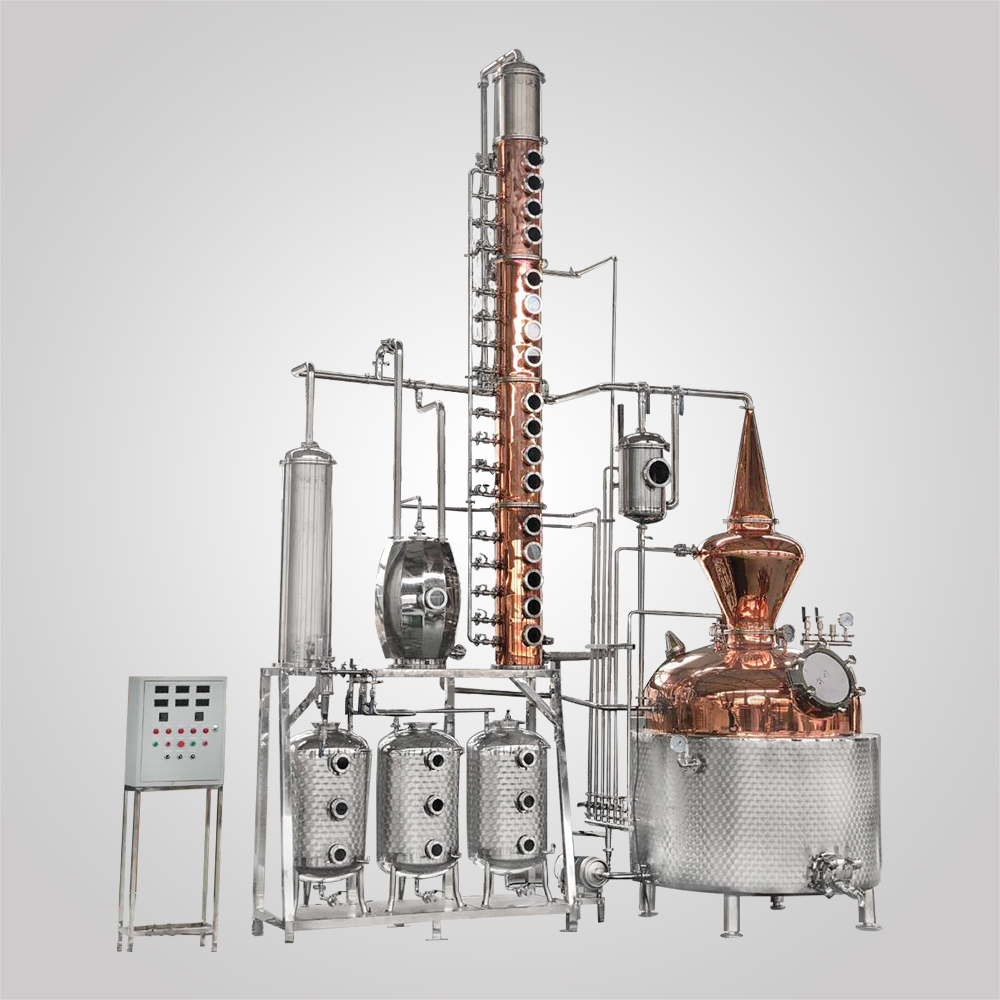
Esta bebida espirituosa con infusión de plantas se destila en un alambique de cobre.
Durante la destilación:
- Se eliminan los compuestos no deseados.
- Los aceites botánicos esenciales son concentrados.
- El licor adquiere un sabor más suave y refinado.
- El destilador separa las cabezas, los corazones y las colas, y solo conserva el corte del corazón, que es el de mayor calidad.
El rendimiento típico de la destilación oscila entre De 75% a 85% ABV.
Paso 5. Dilución
Tras la destilación, la ginebra se diluye con agua desmineralizada hasta alcanzar la graduación alcohólica deseada para el embotellado.
Entre las concentraciones típicas de embotellado se incluyen:
- 37,51 TP3T de alcohol por volumen (mínimo en muchos mercados)
- 40% ABV
- 42% ABV
- 43% ABV
- 45% ABV
- 47% ABV
Un mayor contenido alcohólico suele potenciar la intensidad de los aromas botánicos.
Paso 6. Filtración
Muchos destiladores enfrían la ginebra antes de filtrarla para eliminar el exceso de aceites esenciales y mejorar su claridad visual.
Entre las opciones de filtración más habituales se incluyen:
- Filtración por cartucho
- Carbón activo (si se utiliza con precaución)
- Filtración por membrana
- Filtración por estabilización en frío
Paso 7. Embotellado
La ginebra ya elaborada se embotella mediante una línea de llenado automática.
Una línea completa de embotellado puede incluir:
- Enjuague de botellas
- Relleno
- Tapado
- Etiquetado
- Codificación de la fecha
- Envases de cartón
Un embalaje adecuado protege la calidad del producto y, al mismo tiempo, mejora su atractivo en el lineal.
Equipos necesarios para la producción de ginebra
Una línea completa de producción de ginebra suele incluir:
- Depósito de almacenamiento ENA
- Depósito de mezcla y dilución
- Depósito de maceración botánica
- Alambique de cobre
- Cesta para ginebra (para infusión al vapor)
- Condensador
- Depósito de recogida de alcohol
- Sistema de filtración
- Depósito de almacenamiento brillante
- Línea de embotellado automática
- Sistema de limpieza CIP
- Caldera de vapor
- Sistema de tratamiento de agua
Por qué el cobre sigue siendo importante
El cobre desempeña un papel importante en la destilación del gin.
Los beneficios incluyen:
- Elimina los compuestos de azufre
- Mejora la suavidad del licor
- Potencia los aromas botánicos
- Proporciona un acabado más limpio
- Ofrece una ginebra de primera calidad
Por eso, la mayoría de las destilerías artesanales de ginebra siguen utilizando alambiques tradicionales de cobre.
Solución integral para destilerías de ginebra de TIANTAI
TIANTAI ofrece soluciones integrales «llave en mano» para la producción de ginebra artesanal y comercial.
Nuestros sistemas incluyen:
- Alambiques híbridos de acero inoxidable y cobre
- Cestas de ginebra personalizadas
- Depósitos de extracción botánica
- Sistemas de mezcla ENA
- Depósitos de almacenamiento de alcohol
- Sistemas de control automático (PLC)
- Sistemas de limpieza CIP
- Líneas de embotellado y envasado
- Instalación, puesta en marcha y formación técnica
Tanto si produce 100 L, 500 L, 1 000 L, 2000 L, o para lotes más grandes, TIANTAI puede diseñar a medida una destilería de ginebra que se adapte a tus objetivos de producción, a la normativa local y a tu presupuesto.
La elaboración de ginebra con alcohol extra neutro permite a los destiladores centrarse en lo que realmente define a su marca: la receta botánica. Al partir de un aguardiente limpio y de alta pureza, seleccionar cuidadosamente los botánicos y utilizar equipos de destilación profesionales, los productores pueden crear ginebras de primera calidad con un aroma, un equilibrio y una consistencia excepcionales.
Gracias a las soluciones integrales para destilerías de TIANTAI, tanto los emprendedores como las destilerías ya consolidadas pueden construir instalaciones de producción de ginebra eficientes, escalables y de alta calidad que satisfagan las demandas del creciente mercado actual de bebidas espirituosas artesanales.
Editado por Daisy: [email protected]